The Federal Reserve is an independent organization, meant to be insulated from politics, and the Supreme Court suggested last year that President Donald Trump would need a reason, or cause, to fire Federal Reserve Chairman Jerome Powell.
The Federal Reserve is an independent organization, meant to be insulated from politics, and the Supreme Courtsuggested last yearthat President Donald Trump would need a reason, or cause, to fire Federal Reserve Chairman Jerome Powell.
So Trump — who hasrepeatedlyexpressed hisangerat the Fed chair for declining to lower interest rates on Trump’s watch — isbuilding one upwith the help of aides and now, apparently, federal prosecutors.
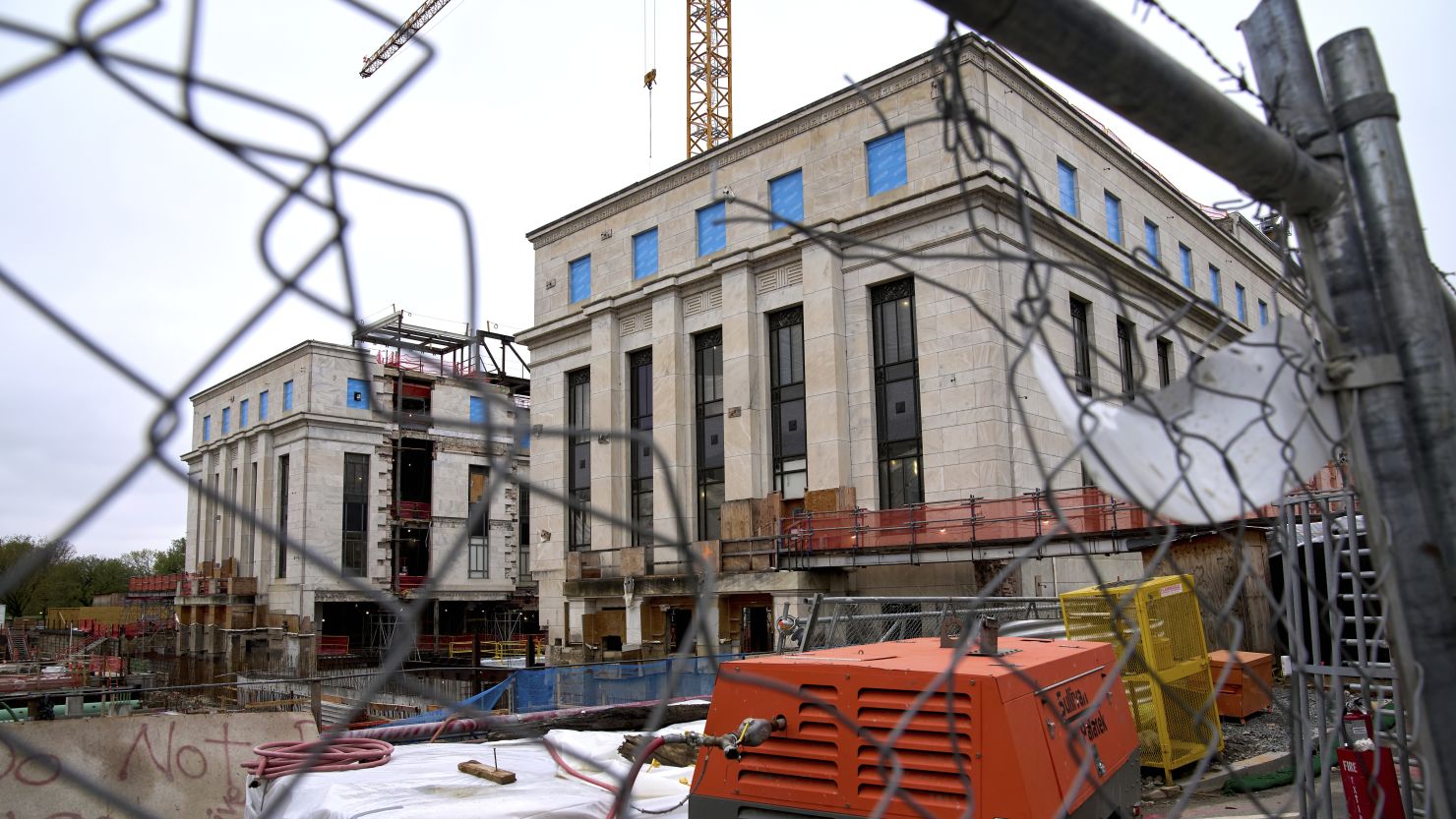
CNN reported Sunday that a federal criminal case is centered on Powell’s testimony last June aboutan over-budget renovation of the Federal Reserve complex, including the historic marbleMarriner S. Eccles Buildingalong Constitution Avenue and the National Mall in Washington, DC.
In a video statement Sunday, Powell said the criminal case was actually a pretext to undercut the Fed’s independence.
“This is about whether the Fed will be able to continue to set interest rates based on evidence and economic conditions, or whether instead, monetary policy will be directed by political pressure or intimidation,” Powell said.
Powell’s term as chairman expires in May, although he could remain on the larger board of governors until 2028. Trump has beenactively interviewing potentialreplacements.
The building at the center of the criminal probe opened in the 1930s and hasn’t had a complete overhaul in the more than 90 years since then. Powell and other Fed officials took it on as a multi-step, multi-building process.
As frequently happens with government building projects, the project has blown past its planned budget, with the cost skyrocketing from an initially large $1.9 billion to an eye-popping $2.5 billion. Planning got underway during Trump’s first term, which is also when Trump nominated Powell to be Fed chairman.
The threat of Trump firing Powell appeared to have subsided after the two shared an awkward tour of the construction site in hard hats last year — though Trump misstated facts about the project and Powelltried to correct him in real time.
But this new criminal probe could reopen the issue andspook marketsin the waning months of Powell’s term. It also sends a message to the next Fed chair.
Here’s a look at what’s going on.
“I was surprised he was appointed,” Trump said at the White House last summer, either forgetting or perhaps fudging about his role in first nominating Powell as Fed chair during his first term.
In the years since, as Trump turned on Powell over interest rates and former President Joe Biden renominated him, prices for the renovation spiraled.
Trump has demanded that the Fed lower interest rates — and raised the idea that Powell could be fired over the renovation, although helater saidthat he was “highly unlikely” to do so.
A common Republican talking point is that the price of the renovation, some $2.5 billion, exceeds that of the Palace of Versailles with inflation taken into account. Powell surely knows a thing or two about inflation, since he and other members of the Federal Open Market Committee have kept interest rates well abovewhere Trump wants themin order to control inflation.
Invoking the excesses of Louis XIV in pre-Revolutionary France is an intentional dig byDirector of the Office of Management and Budget Russell Voughtand others.
Critics have pointed to plans for the building that reference garden terraces on the roof, an executive elevator that takes people to a dining level and loads and loads of marble.
Powell and the Fed have said those amenities are being taken out of context. The garden terrace on the roof is actually replacing green space on top of an underground parking garage. A green roof on the building is meant, they say, to help with stormwater and longevity, and the practice had previously been encouraged by the federal government. The executive elevator is a rehab of an existing elevator to make it usable by the disabled. The elevator itself was in place when the building first opened. Most of the marble, Powell says, will be reused from the original structure.
Regardless of what’s been pared back, people should expect that $2.5 billion does buy a very nice set of rehabbed buildings for the nation’s central bank.
There’s one great irony to point out here, which is that while the effort to unseat Powell is focused on cost overruns in the redevelopment of a historic building with classical architecture, Trump has also decreed that Washington, DC, be beautified with an emphasis on classical architecture. Take a look at his ownEast Wing renovation, undertaken without outside input, and his plans to build atriumphal archin Virginia.
As he put it in a memo shortly after taking office in January, “Federal public buildings should be visually identifiable as civic buildings and respect regional, traditional, and classical architectural heritage in order to uplift and beautify public spaces and ennoble the United States and our system of self-government.”
The original estimate of $1.9 billion has ballooned since 2019. What happened in between — as Powell, more than anyone in the country, can probably tell you — is that the pandemic and the government’s response to it caused inflation. Building costs rose.
But there are other reasons. Multiple authorities, including the National Capitol Planning Commission, asked for changes to plans. And the Fed argues it made tweaks to lower costs.
Mitigating asbestos and a higher-than-expected water table also led to overruns, according to anFAQ published on the Fed’s website.
It’s public money, but Fed funding does not come from Congress. The Fed gets most of its funds from charging interest on the securities it owns in the public interest —treasuries and mortgage-backed securities. But it is buying fewer securities and has let a lot of them fall off its balance sheet as the economy continues to emerge from the pandemic. The Fed has run a deficit in recent years. By aggressively raising interest rates to combat inflation, the Fed had to pay more to banks.
The project is actually for multiple buildings that “needed a lot of work,” as Powell told senators in June.
The Fed’s main Eccles building in particular, Powell said, hadn’t had a serious renovation since it opened in the 1930s. “It was not really safe, and it was not waterproof.”
On its website, theFed has postedvideo of water pouring into the building’s basement in 2017 and asbestos abatement during the renovation.
Powell bears responsibility. Before he was Fed chairman, he was the administrative governor involved in overseeing the early portions of the project.
“No one in office wants to do a major renovation of a historic building during their term,” he told the Senate Banking Committee in June. “You much prefer to leave that to your successors and this is a great example why,” he said, referring to the current backlash. “But we decided to take it on.”
Republican Sen. Tim Scott, who chairs the Senate Banking Committee, seized on reports from boththe Wall Street Journalandthe New York Postwhen he grilled Powell about the overruns in June.
Things went into overdrive in July, when Vought alleged in a letter he posted to X that Powell may have broken the law. Also that month, Trumpinstalled three loyalistson the National Capital Planning Commission, the federal government’s planning organization for the DC region, which has some oversight of the project.
Vought’s letter argues that Powell’s testimony in June that a roof garden terrace and an executive elevator were no longer part of the project suggests changes were made without consulting the planning commission,which approved final plans in 2021. Vought admits minor changes are allowed, but suggests the changes Powell mentioned go further than what could be allowed by law without seeking approval from the commission.
Vought, before he returned to the White House with Trump, was an architect of Project 2025, the Heritage Foundation playbook to remake the US government. Project 2025 takes a counterfactual view of the Great Depression, arguing that banking regulation prolonged the downturn.Project 2025suggested “effectively abolishing” the Federal Reserve and returning to a pre-1913 era of banking anarchy.
Trump may or may not share that view, but he has repeatedly criticized Powellover interest rates. It’s actually a committee of Fed bankers, led by Powell, that controls rates. Each of those bankers is appointed by the president and confirmed by the Senate.
CNN’s Phil Mattingly hasreported that leveragingthis controversy to pressure that board was part of the original point.
But the Federal Reserve itself was intentionally created after a series of banking panics, and gained much more independence in successive decades to insulate it from politics. Presidents from both parties now frequently grouse about the decisions.
With that context, the news of a criminal probe into the Fed chairman takes on added importance for the country, the economy and the independence of the Federal Reserve.
This story and headline have been updated to reflect new reporting.